 asetpintar.com Kelola aset makin pintar
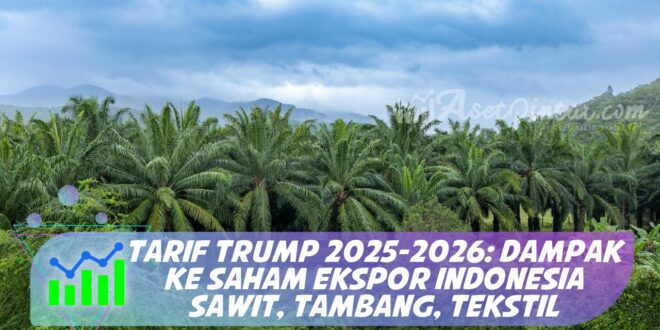
Halo sahabat asetpintar! Sejak Donald Trump kembali ke Gedung Putih sebagai Presiden Amerika Serikat ke-47 pada Januari 2025, kebijakan tarif proteksionisme yang dia janjikan kampanye mulai diimplementasikan. Tarif baru ke berbagai negara termasuk Indonesia menjadi headline ekonomi global yang impact-nya akan terasa berbulan-bulan bahkan tahun ke depan. Bagi sahabat asetpintar yang punya saham eksportir Indonesia atau concern dengan macro economy domestik, kebijakan tarif ini wajib dipahami.
Berdasarkan data BPS, ekspor Indonesia ke AS per 2024 mencapai $24+ miliar — sekitar 10 persen total ekspor Indonesia. Komoditas utama: minyak sawit (CPO), karet, produk garmen/tekstil, sepatu, elektronik, dan mineral tambang. Dengan tarif Trump yang mengenakan duty 10-25 persen pada produk-produk tertentu (depending on negara dan kategori), ekspor Indonesia akan terkena hit signifikan.
Artikel ini analisis lengkap kebijakan tarif Trump 2025-2026: detail tarif yang diberlakukan, sektor-sektor yang paling terpukul, saham-saham IDX yang akan terdampak, perbandingan dengan reaksi pemerintah Indonesia, dan strategi investor untuk navigate dalam era proteksionisme global. Sahabat asetpintar, mari kita bedah implikasi geopolitik global ke portfolio investasi Anda.
Detail Kebijakan Tarif Trump
Tarif Universal 10% pada Semua Impor
Salah satu kebijakan signature Trump 2025: tarif universal 10 persen pada semua barang impor ke AS, terlepas asal negara. Ini implementasi dari janji kampanye “America First” untuk lindungi industri domestik. Indonesia sebagai eksportir ke AS otomatis kena tarif ini untuk semua produk.
Untuk produk Indonesia yang competitive (misal CPO yang harganya bawah produsen US), tarif 10 persen relatif manageable. Tapi untuk produk dengan margin tipis (tekstil, garmen), 10 persen bisa membuat tidak profitable lagi ekspor ke AS.
Tarif Khusus untuk China (Hingga 60%)
Trump mengenakan tarif tambahan 25-60 persen pada produk China yang masuk AS, sebagai respons defisit perdagangan AS-China. Ini tidak langsung impact Indonesia, tapi indirect effect besar:
Trade diversion ke Indonesia: produk yang sebelumnya diekspor China ke AS, sekarang produsen China cari market lain. Sebagian dialihkan ke Indonesia (banjir produk China murah ke pasar Indonesia). Plus produsen Indonesia yang ekspor ke AS menggantikan slot China bisa benefit.
China cari market alternatif: dengan AS tertutup, China dorong ekspor ke ASEAN termasuk Indonesia. Ini meningkatkan kompetisi produk China di pasar Indonesia (BYD vs Astra di otomotif, Huawei vs Apple di smartphone, dll).
Tarif Spesifik untuk Sektor Tertentu
Selain tarif universal, Trump implementasi tarif khusus pada beberapa sektor: Baja dan aluminium: 25 persen (dari semua negara). Solar panel: 30-50 persen. Mobil dan suku cadang: 25 persen. Semikonduktor: 25 persen.
Indonesia tidak major exporter di sektor ini, tapi impact tidak langsung via supply chain global. Misal Indonesia ekspor nikel sebagai bahan baku baterai EV ke China, lalu China ekspor baterai ke AS. Kalau baterai China kena tarif tinggi, demand nikel Indonesia juga turun.
Sektor Ekspor Indonesia yang Terdampak
Minyak Kelapa Sawit (CPO)
Indonesia adalah produsen CPO terbesar dunia dengan ekspor $30+ miliar per tahun. AS adalah salah satu market signifikan (~$1,5 miliar). Tarif 10 persen pada CPO Indonesia akan: (1) Naikkan harga di pasar AS — buyer mungkin shift ke kedelai oil atau bunga matahari, (2) Eksportir Indonesia bisa lose 10-15 persen revenue dari market AS, (3) Pricing pressure ke harga CPO global.
Saham yang terdampak: Astra Agro Lestari (AALI), PP London Sumatra (LSIP), Sampoerna Agro (SGRO), Salim Ivomas Pratama (SIMP). Mayoritas akan tertekan jangka pendek 6-12 bulan saat market adjust ke realitas baru.
Mitigasi: Indonesia ekspor utama CPO ke India, China, EU — bukan AS. Loss dari AS bisa di-compensate dengan ekspansi ke market lain. Plus Indonesia ada B40 mandate (campuran biodiesel) yang serap CPO domestik signifikan.
Tekstil dan Garmen
Indonesia exporter besar tekstil dan garmen ke AS, dengan brand global seperti Adidas, Nike memproduksi di Indonesia. Total ekspor sekitar $5+ miliar per tahun. Tarif 10 persen akan tekan profitability eksportir.
Saham: Sri Rejeki Isman (SRIL), Pan Brothers (PBRX). Kedua saham sudah lemah secara fundamental, tarif Trump tambah pressure. Risk fundamental signifikan untuk yang punya posisi.
Karet dan Komoditas Lain
Karet Indonesia ekspor ke AS untuk industri otomotif (ban). Dengan tarif 25 persen pada mobil, demand karet otomatis turun. Saham karet seperti Bakrie Sumatera Plantations (UNSP) akan terdampak.
Plus komoditas lain seperti kopi, kakao, rempah punya market US yang signifikan. Tarif 10 persen reduce competitiveness vs produsen lain.
Mineral Tambang
Indonesia eksportir nikel, batubara, dan tembaga. Sebagian indirect impact via China:
Nikel: bahan baku baterai EV. Kalau baterai China kena tarif tinggi di AS, demand nikel Indonesia (yang banyak ke China) bisa turun. Saham terdampak: Vale Indonesia (INCO), Aneka Tambang (ANTM), Harum Energy (HRUM).
Batubara: tarif untuk batubara langsung tidak ada (US punya domestic supply), tapi global energy market adjust. Saham: Adaro Energy (ADRO), Bukit Asam (PTBA), Indo Tambangraya Megah (ITMG) relatif stable karena demand China dan India.
Sektor yang Justru Bisa Benefit
Trade Diversion dari China
Sebagian produsen China yang previously ekspor ke AS akan cari relocate produksi ke negara non-tarif tinggi. Indonesia berpotensi jadi destinasi:
Kawasan industri Indonesia: Tangerang, Bekasi, Cikarang melihat investasi baru dari Chinese manufacturers. Saham developer kawasan industri seperti Bekasi Fajar Industrial Estate (BEST), Kawasan Industri Jababeka (KIJA), Surya Internusa (SSIA) bisa benefit.
Manufacturer Indonesia yang menggantikan slot China di market AS: untuk produk komoditas standard, eksportir Indonesia bisa dapat order yang dulunya ke China. Ini benefit jangka pendek-menengah, tapi competitiveness Indonesia harus terjaga (productivity, quality).
Konsumsi Domestik
Trade war dan proteksionisme global akan menekan ekspor secara umum, tapi konsumsi domestik Indonesia (53 persen PDB) tetap stabil. Saham consumer goods seperti Indofood CBP (ICBP), Unilever Indonesia (UNVR), Mayora Indah (MYOR) relatif aman karena fokus market dalam negeri.
Plus, kebijakan Bank Indonesia mendukung daya beli (suku bunga stabil, bantuan sosial pemerintah). Konsumsi tetap engine pertumbuhan ekonomi Indonesia.
Bank dan Finansial
Saham perbankan (BBRI, BMRI, BBCA, BBNI) relatif tidak langsung terdampak tarif Trump. Bisnis utama mereka domestic — pinjaman ke konsumen dan UMKM Indonesia. Tarif Trump tidak ubah kebutuhan KPR, KTA, atau modal kerja UMKM.
Indirect impact: kalau ekspor turun, ekonomi Indonesia melambat, pertumbuhan kredit perbankan bisa moderat. Tapi BI rate yang dipertahankan rendah bisa stimulate kredit. Net effect manageable.
Reaksi Pemerintah Indonesia
Negosiasi Bilateral
Pemerintah Prabowo aktif negosiasi bilateral dengan AS untuk minimize tarif. Strategi: tawarkan kerjasama strategis (mineral nikel untuk baterai EV US, militer cooperation, investment deal). Kalau berhasil, Indonesia bisa dapat exemption parsial dari tarif universal 10 persen.
Track record diplomatik Indonesia: sukses dapat GSP (Generalized System of Preferences) facility dari AS sebelumnya. Mungkin bisa repeat.
Diversifikasi Market Ekspor
Pemerintah dorong eksportir ke market alternatif: ASEAN, Middle East, Africa, EU. Plus aktif promosi via trade fair internasional dan kerjasama bilateral dengan negara-negara non-AS.
Indonesia juga bagian dari RCEP (Regional Comprehensive Economic Partnership) yang include China, Japan, South Korea, Australia, New Zealand, ASEAN. Ini buffer dari ketergantungan pada US market.
Stimulasi Konsumsi Domestik
Untuk offset penurunan ekspor, pemerintah dorong konsumsi domestik via: bansos extended, infrastructure spending, deregulasi UMKM. Konsumsi naik akan kompensasi sebagian dampak ekspor turun.
Strategi Investor
Reduce Exposure ke Saham Eksportir Berisiko
Untuk sahabat asetpintar yang punya saham di sektor terdampak (CPO, tekstil, mineral tambang ke US): pertimbangkan reduce posisi 25-50 persen. Bukan exit total — banyak saham ini punya valuasi attractive dan bisa rebound saat negosiasi tarif berhasil. Tapi reduce concentration risk masuk akal.
Tambah Exposure ke Domestic Stories
Allocate ke saham dengan revenue dominan dari domestik:
Consumer goods: ICBP, UNVR, MYOR, SIDO — defensive, growth dari konsumsi Indonesia. Banking: BBRI, BMRI, BBCA — bisnis Indonesia-focused. Properti dan infrastruktur: BSDE, JSMR, WSKT — benefit dari spending pemerintah. Telco: TLKM, EXCL — domestic data consumption growth. Healthcare: KLBF, KAEF — defensive.
Hedging dengan Emas
Trade tensions global biasanya boost harga emas (safe haven asset). Saat geopolitik tidak pasti, allocate 5-15 persen portfolio ke emas batangan via Pegadaian Digital atau aplikasi serupa. Emas akan benefit kalau krisis berlanjut.
Diversifikasi ke Reksadana Global
Reksadana saham yang invest ke US blue chip atau global market punya exposure ke “winner” dari kebijakan Trump. American multinationals (Apple, Microsoft, Nvidia) yang dominasi AS bisa benefit dari tarif yang protect their domestic market. Reksadana seperti Schroders Global Equity, Manulife Global Equity bisa pertimbangkan.
Outlook Jangka Panjang
Skenario Bullish (Negosiasi Sukses)
Kalau Indonesia berhasil dapat exemption atau reduce tarif via diplomatic effort, dampak ke ekspor Indonesia minimal. Saham eksportir bisa pulih dalam 3-6 bulan. Ekonomi tumbuh sesuai target 5,2-5,5 persen 2026.
Skenario Bearish (Tarif Penuh Diterapkan)
Kalau tarif penuh implementasi tanpa exemption, ekspor Indonesia turun 8-12 persen di 2026. PDB pertumbuhan turun ke 4,5-5 persen. Saham eksportir tertekan 20-30 persen lebih lanjut. Rupiah melemah ke Rp 17.000-18.000 per USD.
Skenario Realistis
Mid-case: tarif sebagian implementasi, sebagian dinegosiasikan. Indonesia bisa survive dengan kombinasi diversifikasi market dan stimulasi domestik. Ekonomi tumbuh 4,8-5,2 persen — at lower end target tapi tidak crash.
Kesimpulan dan Action Plan
Sahabat asetpintar, kebijakan tarif Trump 2025-2026 adalah event makro signifikan yang impact-nya berbulan-bulan bahkan tahun ke depan. Saham eksportir Indonesia di sektor CPO, tekstil, dan tambang akan tertekan jangka pendek-menengah. Saham consumer goods, banking, dan domestic-focused relatif aman dan bisa benefit dari shifting konsumsi.
Untuk investor: ini bukan situasi panic, tapi situasi yang butuh strategi adjustment. Diversifikasi portfolio, reduce exposure ke high-risk eksportir, allocate ke domestic stories, plus hedging emas. Long-term, Indonesia tetap punya fundamental ekonomi solid dengan demografi muda dan konsumsi yang growing.
Action plan konkret: Pertama, audit portfolio Anda — berapa persen di saham eksportir vs domestic. Kalau lebih dari 50 persen di eksportir, rebalance. Kedua, monitor news ekonomi rutin (CNBC Indonesia, Bisnis.com, Reuters Indonesia) untuk update kebijakan tarif. Ketiga, tambah alokasi ke emas 5-15 persen sebagai safe haven. Keempat, untuk investor agresif, pertimbangkan reksadana saham global untuk exposure ke US market yang benefit. Kelima, jangan panic sell di tengah volatility — fundamental Indonesia tetap solid jangka panjang. Keenam, pakai krisis sebagai opportunity buy saham bagus dengan diskon. Sahabat asetpintar yang aware dan adapt akan emerge stronger dari era proteksionisme global ini.
Disclaimer: Artikel ini analisis berdasarkan informasi publik dan situasi geopolitik yang dinamis. Kebijakan dan implikasi bisa berubah. Bukan saran investasi spesifik. Konsultasikan dengan financial planner untuk strategi sesuai kondisi Anda.
Disclaimer
Konten dalam artikel ini bersifat edukasi dan informasi umum, bukan rekomendasi investasi atau saran finansial personal. Setiap keputusan investasi dan keuangan adalah tanggung jawab pribadi pembaca.
Asetpintar.com dan penulis tidak bertanggung jawab atas kerugian, kehilangan, atau dampak negatif yang timbul akibat keputusan berdasarkan informasi di artikel ini.
Untuk keputusan investasi yang signifikan, konsultasikan dengan perencana keuangan bersertifikat (CFP) atau broker resmi yang terdaftar di OJK. Pelajari profil risiko Anda sebelum memilih instrumen investasi.
Baca juga: panduan obligasi